
A governance redesign and a vendor consolidation that reset the relationship between an insurer and its technology suppliers.
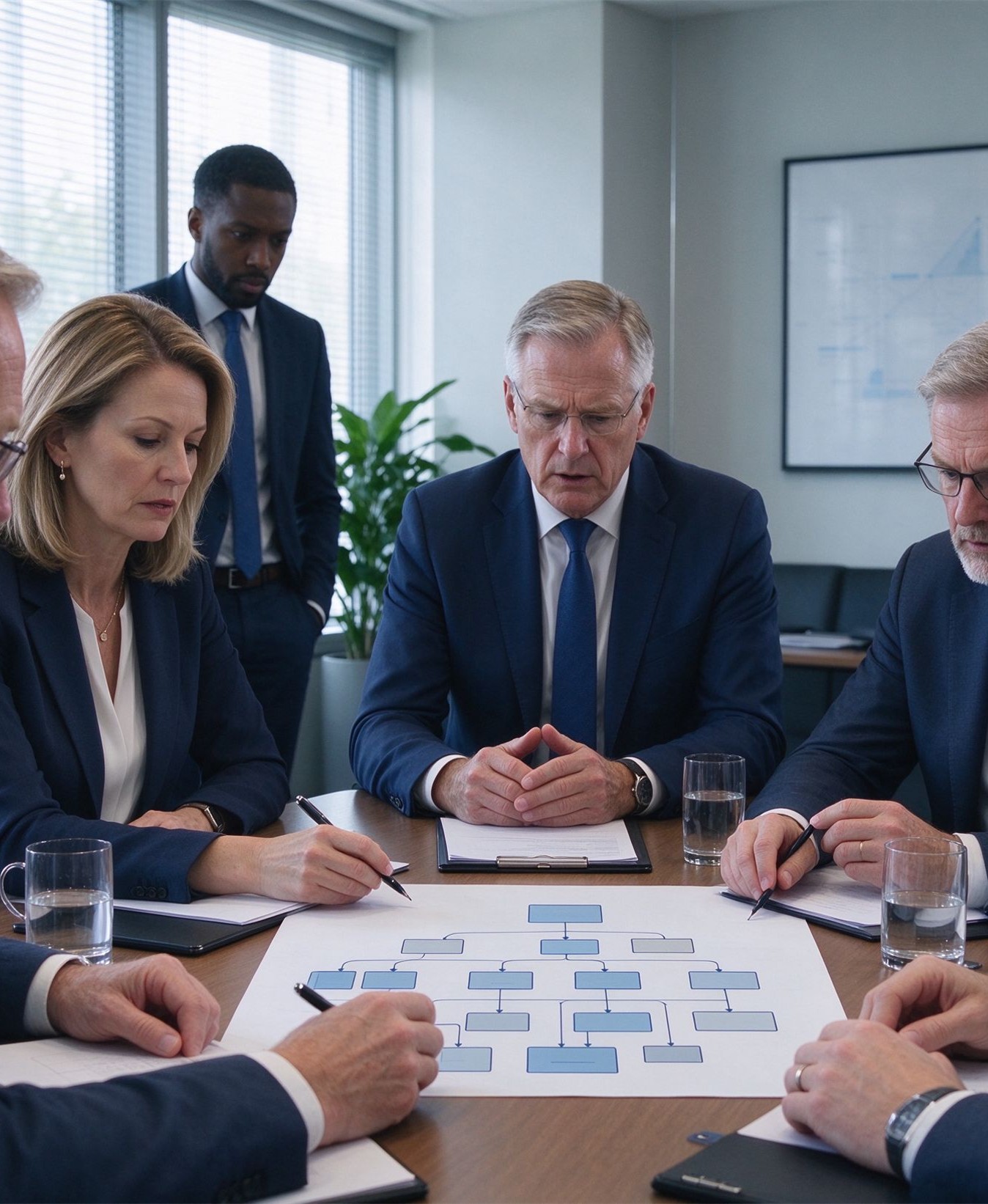
Over the previous decade the client had progressively outsourced significant portions of its technology estate. By the time we were engaged the organisation was operating with nineteen technology vendors of varying size and criticality, with very little consistency in the contractual arrangements that underpinned them. Some were governed under modern managed-service contracts with measurable outcomes. Others were operating under arrangements that had been extended repeatedly without renegotiation, with little in the way of defined service levels and even less in the way of credible exit plans.
The chief operating officer had been asked by the board to address the situation. The CFO had separately been asked why technology run-rate cost had been growing faster than revenue for three consecutive years. Both questions pointed at the same issue: governance had drifted, and the drift had real commercial consequences.
We were engaged to redesign the IT governance framework, to lead a full vendor landscape review and to recommend a consolidation strategy that the executive could execute against. The engagement was deliberately framed around governance first, contracts second, technology third — the order in which such programmes actually succeed.
We started by mapping the governance arrangements as they actually were, not as the contracts said they should be. We interviewed every internal stakeholder who had a relationship with each of the nineteen vendors. We reviewed the actual contract documents against what we had been told in the interviews. The gap between the two was significant and was the foundation on which the entire engagement was built.
We then developed a target governance framework with explicit decision rights at three tiers (strategic, tactical, operational), with clear escalation paths, with named accountable owners for every vendor relationship, and with measurable service-level expectations tied to business outcomes rather than to technical availability metrics.
We had lived with a governance arrangement that nobody fully owned. After nine months we had one that everyone understood and could be measured against. The cost savings were the easier part of the engagement; the harder part was the cultural change. — Chief Operating Officer
The vendor landscape was consolidated from nineteen active technology suppliers to twelve. Three were extended under renegotiated terms, three were consolidated into the arrangements of other vendors, and four were formally retired. The remaining nine were placed under the new governance framework with revised service levels. The retirement programme was the most delicate part of the work — knowledge transfer, contractual exit, and the careful management of relationships that had been in place for a decade or more.
We also worked with the operations team to redesign the internal processes around vendor management. Three previously manual approval workflows were automated. A new vendor risk register was introduced, integrated with the existing operational risk framework. A quarterly vendor performance review was established with executive participation. None of these changes were individually dramatic, but together they changed the way the organisation related to its technology supply chain.


Twelve months after the engagement finished, the CFO reported a 30% reduction in technology run-rate cost against the baseline established at the start of the engagement. Service quality had improved across every measured dimension. The new governance framework had been in place for two complete quarterly cycles without a single unresolved escalation. The chief operating officer noted at the most recent audit and risk committee meeting that the governance structure was now considered a strength rather than a weakness in the organisation's overall control environment.
Governance is one of the most underestimated areas of technology leadership. Most governance failures are not caused by bad intent or incompetence; they are caused by accretion — small decisions made under pressure that, over years, leave an organisation with a governance arrangement that no individual fully understands. The work of governance reset is not glamorous, but it is one of the highest-leverage things an independent advisor can do.
If your organisation is carrying more technology supplier complexity than it should, or if the governance arrangements have drifted away from what the contracts actually say, we are happy to have a confidential conversation about what an engagement could look like.